Setting Up a Small Workshop: 7 Space-Saving Decisions
In a small woodworking workshop, the goal is not simply to fit in as many tools as possible. What matters is whether workpieces can be moved, machined and set down safely between operations. These seven decisions help make sensible use of the available space.
1. Plan around your most frequent projects
Do you mainly build small furniture, process large sheet materials or carry out repairs? The answer determines which work surfaces and machines are genuinely necessary. List your three most frequent jobs first and organise the workshop around those workflows.
2. Allow for the workpiece, not only the machine
A machine may occupy little floor space but still require considerable clearance during use. Check the space in front of, behind and beside it. Doors, walkways and access to switches must remain clear. Follow the manufacturer’s installation and safety instructions.
3. Give the workbench a clear purpose
A workbench is for machining, clamping and assembly. If it becomes permanent storage, the most important work surface is lost. Provide a separate place for ongoing projects and keep frequently used accessories in accessible drawers or holders.
4. Use mobile solutions selectively
A mobile base cabinet or assembly surface can allow the same space to serve several purposes. It must have suitable load capacity, resistance to tipping and reliable locking. Heavy machines should only be moved on systems designed for that purpose.
5. Store tools where they are used
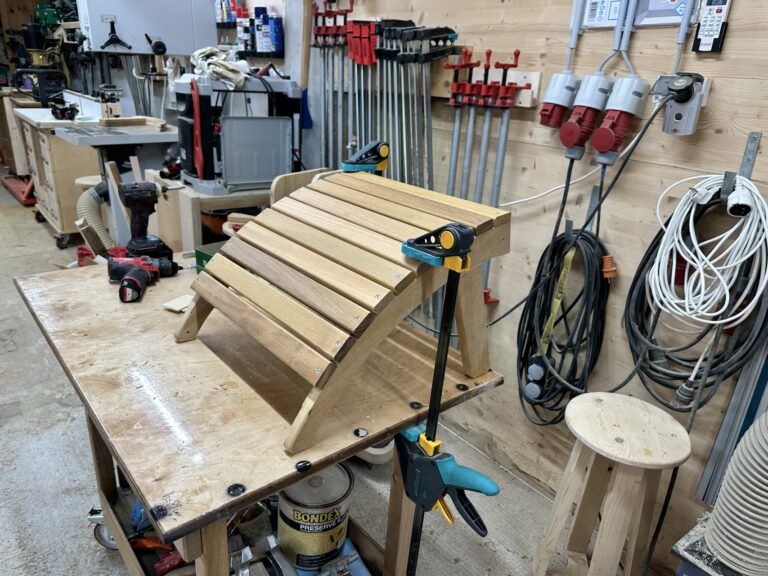
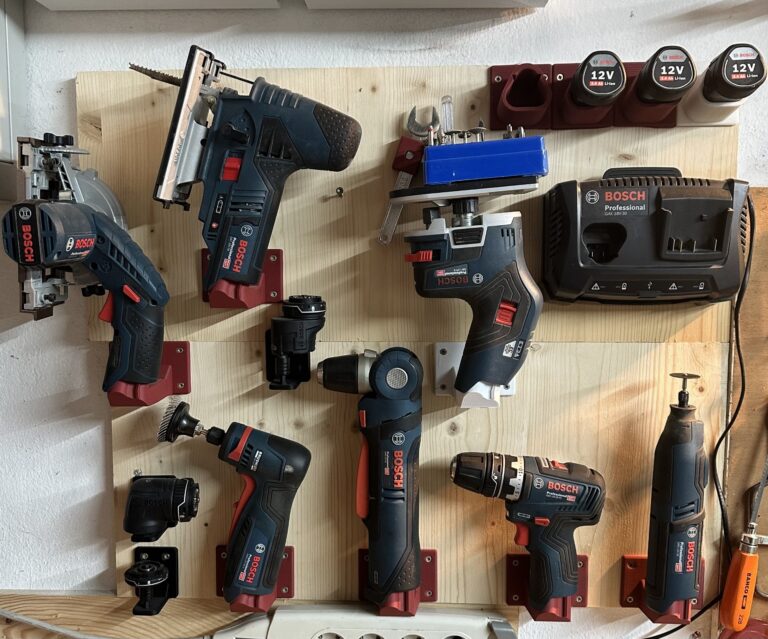
Measuring tools belong near the work area, while clamps should be close to the assembly surface. Wall-mounted holders can keep the floor clear. Use appropriate fixings and make sure heavy or sharp tools can be removed safely.
6. Plan dust extraction and services from the start
Hoses and cables need space and can create trip hazards. Plan their routes together with the workstations. Suitable extraction depends on the machine, material and manufacturer’s instructions; an arbitrary household vacuum is not a substitute for an appropriate wood-dust collection system.
7. Limit material storage
Offcuts are useful only when they remain easy to find and suitable for future projects. Define fixed storage areas and sort them regularly. Long boards and sheet materials require stable storage that prevents tipping or falling.
Practical example: storage beneath the workbench
The following photograph shows drawers and enclosed compartments directly beneath the work surface. This uses the space under the bench without requiring an additional cabinet, while the clamping devices remain accessible at the front.
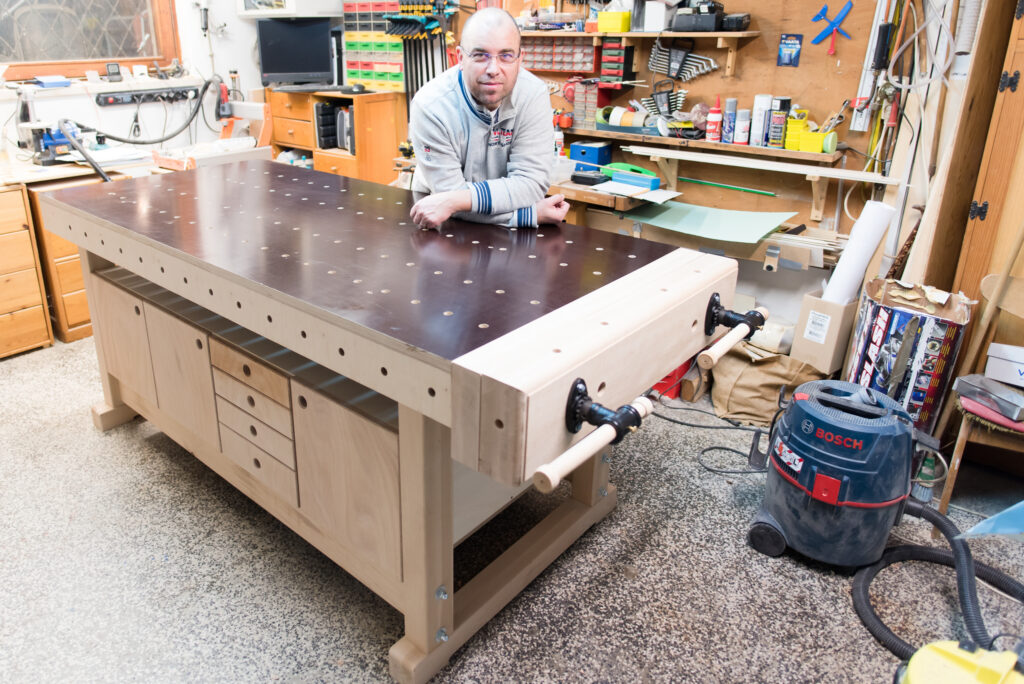
For your own layout, ask whether drawers and doors can still be opened while a workpiece is clamped in place. Is there enough room to stand and work? Check these points before fixing the arrangement.
Workshop products I use myself
My practical experience: These are not random product selections. I bought each product for my own workshop and use it, or have used it, in my projects. These are practical observations rather than laboratory tests. If a product has limitations or I would choose differently today, I say so.
Advertising / affiliate links: As an Amazon Associate I earn from qualifying purchases. If you buy through one of these links, I may receive a commission.
Dust Commander S30 cyclone separator
I bought this pre-separator to collect chips and dust before they reach the main extractor. In a small workshop, it helps reduce the load on the filter and makes emptying the system more manageable.
View the Dust Commander S30 on Amazon.de
IXES IX-ASA100 dust extractor
I bought this unit as part of my workshop dust-extraction setup. It is primarily intended for machines with a larger extraction port; before buying, compare the connection diameter, power and space requirements with your workshop.
View the IXES IX-ASA100 on Amazon.de
KlingerBorn automatic extractor switch
The automatic switch starts the connected extractor with the machine and keeps it running briefly afterwards. It removes one manual step from the workflow. The electrical load, compatibility and manufacturer instructions must suit your installation.
View the KlingerBorn automatic switch on Amazon.de
Stanley SortMaster organizer
I have bought this organizer more than once. I use it for small parts that would otherwise clutter work surfaces and drawers. The clear lid and adjustable compartments make the contents quick to identify.
View the Stanley SortMaster on Amazon.de
Before buying the next tool
Draw a simple floor plan and mark work surfaces, movement zones and storage areas. Then ask which operation currently causes difficulty. Only after identifying that problem can you judge whether a new machine, a better clamping solution or a changed layout will help most.